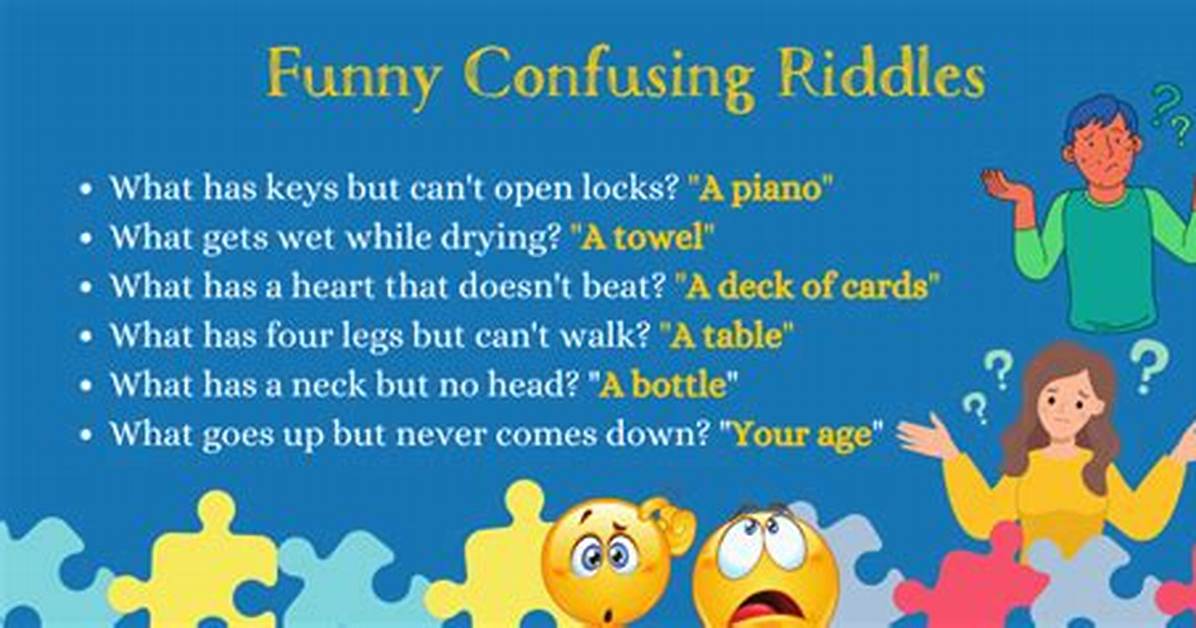
Confusing riddles have captivated minds for centuries, challenging our logic and creativity. These brain teasers not only entertain but also stimulate cognitive functions, making them a popular pastime for people of all ages. In this article, we will delve into the world of confusing riddles, exploring their origins, significance, and some of the most perplexing examples. Whether you're a seasoned riddle enthusiast or a curious newcomer, this guide aims to enhance your understanding and appreciation of these intriguing puzzles.
Riddles serve as an excellent exercise for the brain, promoting critical thinking and problem-solving skills. They can be found in various cultures and languages, each with its unique flavor and style. The beauty of riddles lies in their ability to engage our minds while providing a sense of accomplishment upon finding the solution. By the end of this article, you will not only learn about confusing riddles but also how to create your own and share them with friends and family.
With the rise of social media, sharing riddles has become a popular trend. From Instagram stories to TikTok challenges, confusing riddles have found a home in the digital age. This article will provide you with an array of mind-bending riddles, tips for solving them, and insights into why they captivate us so much. Let’s embark on this riddle-filled journey!
What Are Riddles?
Riddles are a form of word puzzle that poses a question or statement with a hidden meaning. They often rely on clever wordplay, double meanings, or lateral thinking to confuse the reader or listener. Riddles can be categorized into two main types: enigmas and conundrums.
Enigmas
Enigmas are typically expressed in metaphorical language and require more thought to decipher. They often present a scenario that leads to an unexpected conclusion.
Conundrums
Conundrums usually involve a question or a pun, making them more straightforward yet still challenging. They often play with words to create humorous or surprising answers.
The History of Riddles
The origins of riddles can be traced back to ancient civilizations. They have been present in mythology, folklore, and literature for thousands of years. The famous riddle of the Sphinx from Greek mythology is one of the earliest recorded examples:
- “What walks on four legs in the morning, two legs at noon, and three legs in the evening?”
Throughout history, riddles have served various purposes, from entertainment to education. They have been used to convey moral lessons, test intelligence, and even as a form of social commentary. In many cultures, solving riddles was a rite of passage or a way to showcase wit and wisdom.

